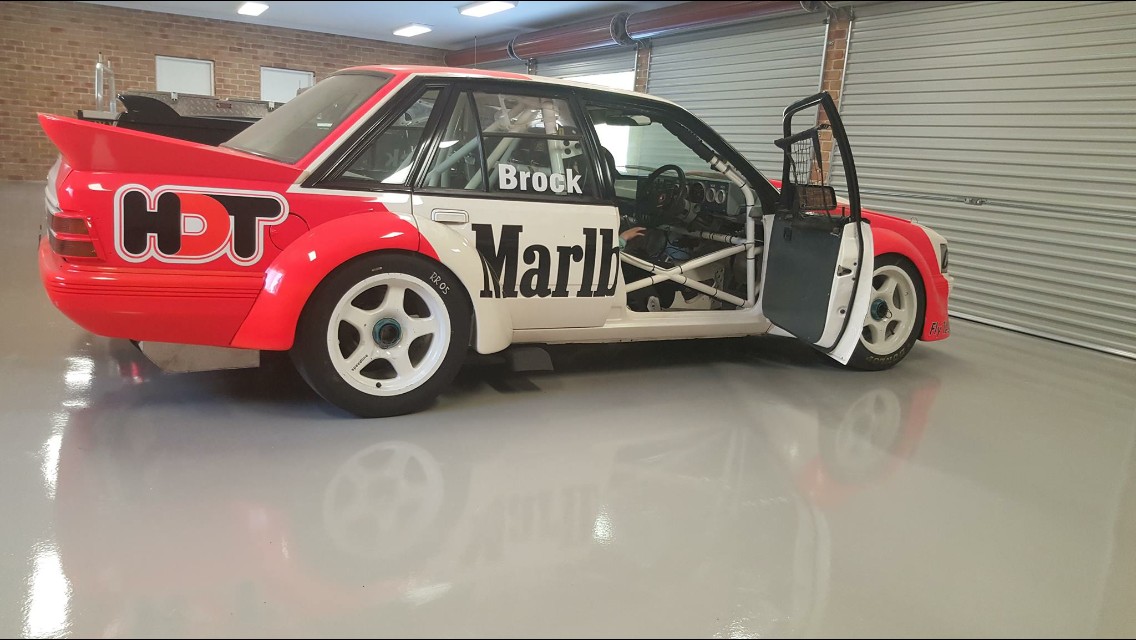
Exceptional hardness: Epoxy's compressive strength can exceed 12,000 psi, making it one of the hardest flooring materials available (Feature Flooring).
Superior adhesion: Epoxy penetrates the pores of concrete and creates a mechanical bond that is often stronger than the concrete itself.
High-build capability: Epoxy can be applied in thick layers (self-leveling systems) to fill minor cracks and imperfections in the substrate.
Broad chemical resistance: Excellent resistance to petroleum-based chemicals, oils, solvents, and alkalis.
Versatile aesthetics: Available in virtually any color, with decorative options including vinyl flakes, quartz aggregates, and metallic pigments.
Epoxy floor coating (thin-film): 8–20 mils, typically 2–3 coats. Best for light-duty use, decorative applications, and dust-proofing. Lowest cost option.
Self-leveling epoxy: 40–120 mils (1–3 mm). Smooth, seamless, high-gloss finish suitable for medium-duty commercial and industrial environments. The most popular system for general use.
Epoxy mortar: 3/16" to ¼" (5–6 mm) or thicker. Trowel-applied system combining epoxy resin with sand or aggregate for exceptional strength and impact resistance. Used for heavy-duty industrial floors and to repair damaged concrete.
Quartz or flake broadcast epoxy: Multi-layer system with decorative aggregate broadcast into wet epoxy, sealed with a clear topcoat. Combines durability with decorative versatility and slip resistance.
ESD (anti-static) epoxy: Formulated with conductive fillers to control static discharge. Required for electronics manufacturing, cleanrooms, and explosive environments.
Chemical-resistant epoxy (novolac): Specialty epoxy formulated with enhanced acid and solvent resistance for extreme chemical environments.
High flexibility and elasticity: PU can stretch and flex under load, absorbing impact and accommodating substrate movement without cracking.
Excellent UV resistance: Aliphatic polyurethanes are color-stable and UV-resistant, making them suitable for exterior use and areas with direct sunlight exposure.
Superior abrasion resistance: The flexible surface resists micro-scratching better than rigid epoxy, maintaining appearance longer in high-traffic areas.
Thermal shock resistance: PU can handle rapid temperature changes without delaminating—critical for food processing and cold storage environments.
Fast cure times: Many PU systems can handle foot traffic in as little as 6–8 hours and heavy loads in 24 hours (CN Forest Coating, 2026).
常见聚氨酯地坪系统类型
Polyurethane topcoat (thin-film): 2–10 mils, applied as a finish coat over epoxy or concrete. Provides UV stability, chemical resistance, and enhanced abrasion resistance. The most common use of PU in flooring today.
Self-leveling polyurethane: 20–60 mils. Smooth, seamless PU flooring system for medium-duty use where flexibility and UV stability are important.
Polyurethane mortar (PU cement): 4–6 mm (3/16"–¼") or thicker. Trowel-applied system combining polyurethane with cementitious aggregates. Exceptional thermal shock resistance and durability. The gold standard for food and beverage processing.
Moisture-cured polyurethane: Single-component system that cures by reacting with atmospheric moisture. Tolerant of high humidity and difficult site conditions.
Polyaspartic polyurea: A related system (technically a polyurea but often grouped with PU) with extremely fast cure times—often return-to-service in hours rather than days.
Project size: Larger projects benefit from economies of scale. Projects under 500 sq ft typically cost significantly more per square foot ($8–$12/sq ft for basic epoxy) due to fixed mobilization costs (Peckham Coatings, 2025).
Floor condition: Floors requiring extensive preparation—crack repair, patching, moisture mitigation, shot blasting—add to the cost. Poor condition can increase pricing by 20–40% (LatestCost, 2025).
System complexity: Multi-layer systems, decorative aggregates, custom colors, and line striping all add cost.
Regional labor rates: Installation labor typically represents 50–65% of total project cost. Urban markets with high labor costs will see higher pricing (LatestCost, 2025).
Temperature: typically 60–90°F (15–32°C), varies by product
Humidity: generally must be below 85% RH; high humidity can cause blushing, amine blush, or poor cure
Concrete moisture: MVER must be ≤ 3 lbs/1,000 sq ft/24 hrs (ASTM F1869) or ≤ 75% RH (ASTM F2170) for most systems (Nedis Floor, 2026)
Ventilation: needed for fume control but can interfere with cure time
聚氨酯施工要求:
Temperature: similar range to epoxy, but some products are more tolerant
Humidity: moisture-cured PU systems actually require moisture to cure; they can be installed in higher humidity conditions than epoxy
Concrete moisture: PU mortar systems tolerate higher MVER (up to 10 lbs/1,000 sq ft/24 hrs) because their curing chemistry uses water as a co-reactant (Nedis Floor, 2026)
Ventilation: PU fumes can be strong; good ventilation is essential
Epoxy primer: Penetrates and seals the concrete substrate, creating a strong mechanical bond.
Epoxy body coat(s): Provides thickness, compressive strength, and leveling. Can include decorative aggregates (flakes, quartz) for texture and appearance. Usually 20–120 mils depending on the system.
Polyurethane topcoat: A thin (2–5 mil) PU seal coat that provides UV stability, enhanced chemical resistance, superior abrasion resistance, and color retention.
Superior appearance retention: The PU topcoat prevents epoxy yellowing and provides better scratch resistance, keeping the floor looking newer for longer.
Better chemical resistance: The PU topcoat adds resistance to organic acids and chemicals that would attack epoxy, while the epoxy base handles petroleum-based chemicals.
Cost-effective: Cheaper than an all-PU system but better performing than an all-epoxy system. The PU topcoat adds only $1–$3 per square foot to the cost but can extend the service life by 50% or more.
Proven performance: This combination has been the industry standard for commercial and industrial flooring for decades, with a well-established track record of reliability.
何时考虑纯聚氨酯系统
虽然混合系统在许多应用中效果很好,但在某些情况下,完整的PU系统(或PU砂浆)才是正确的选择:
Environments with extreme thermal shock (food processing, cold storage)
Floors requiring USDA/FDA food-contact compliance
Areas with chronic high moisture or slab moisture issues
Installations with extremely tight return-to-service requirements
Exterior applications where the entire system must be UV-stable
Traffic type and volume: Foot traffic only? Wheeled carts? Forklifts? How heavy and how frequent?
Chemical exposure: What chemicals will contact the floor? (List specific chemicals, concentrations, temperatures, and contact durations.)
Temperature range: What's the normal operating temperature? Are there rapid temperature swings (thermal shock)? Will the floor see freezing temperatures?
Moisture exposure: Is the floor frequently wet? Are there regular washdowns? What's the slab moisture condition?
UV exposure: Will the floor be exposed to direct or indirect sunlight?
Regulatory requirements: FDA/USDA? OSHA? GMP? ESD? Any industry-specific flooring standards?
第二步:应用决策逻辑
根据您的环境评估:
If thermal shock or extreme temperature cycling is present → Choose polyurethane mortar. This is the single most definitive differentiator. Epoxy cannot handle rapid temperature swings without risk of delamination.
If UV exposure is significant → Add a PU topcoat (hybrid) or choose full PU. Epoxy will yellow, chalk, and degrade under UV. Even indoor areas with skylights or large windows can cause noticeable epoxy yellowing over time.
If heavy static loads or petroleum chemical exposure dominate → Choose epoxy (with PU topcoat). Epoxy's compressive strength and hydrocarbon resistance are unmatched.
If food processing, dairy, or commercial kitchen → Choose PU mortar. The combination of organic acid resistance, thermal shock tolerance, moisture tolerance, and sanitary coving capability makes PU the clear choice.
If downtime must be minimized → Choose fast-cure PU or polyaspartic. The ability to install over a weekend or overnight can be worth far more than any material cost premium.
If budget is tight and conditions are moderate → Choose self-leveling epoxy. For general-purpose commercial flooring with light to moderate traffic, epoxy delivers excellent value.
第三步:通过测试和专家评审验证
在最终确定您的规格之前:
Test the concrete slab for moisture vapor emission rate (MVER) and internal relative humidity
Review the manufacturer's product data sheets and chemical resistance charts against your specific conditions
Get references from similar facilities with the same system you're considering
Have a qualified flooring contractor inspect the site and provide a professional recommendation
Consider a mock-up installation to verify appearance and performance before committing to the full project